
Online blackjack in Canada
Online blackjack is played against a dealer: the aim is to beat the dealer’s hand without going over 21. This guide is for adult readers in Canada who want to understand the basic rules or compare online formats, including live dealer games. It explains common player actions and the conditions to check in a particular game’s rules before choosing a table.
How a blackjack hand works
In ordinary blackjack, your hand is compared with the dealer’s. You aim to beat the dealer without exceeding 21. Going over 21 is a bust and loses the hand. A total close to 21 alone does not determine the result; both hands matter.
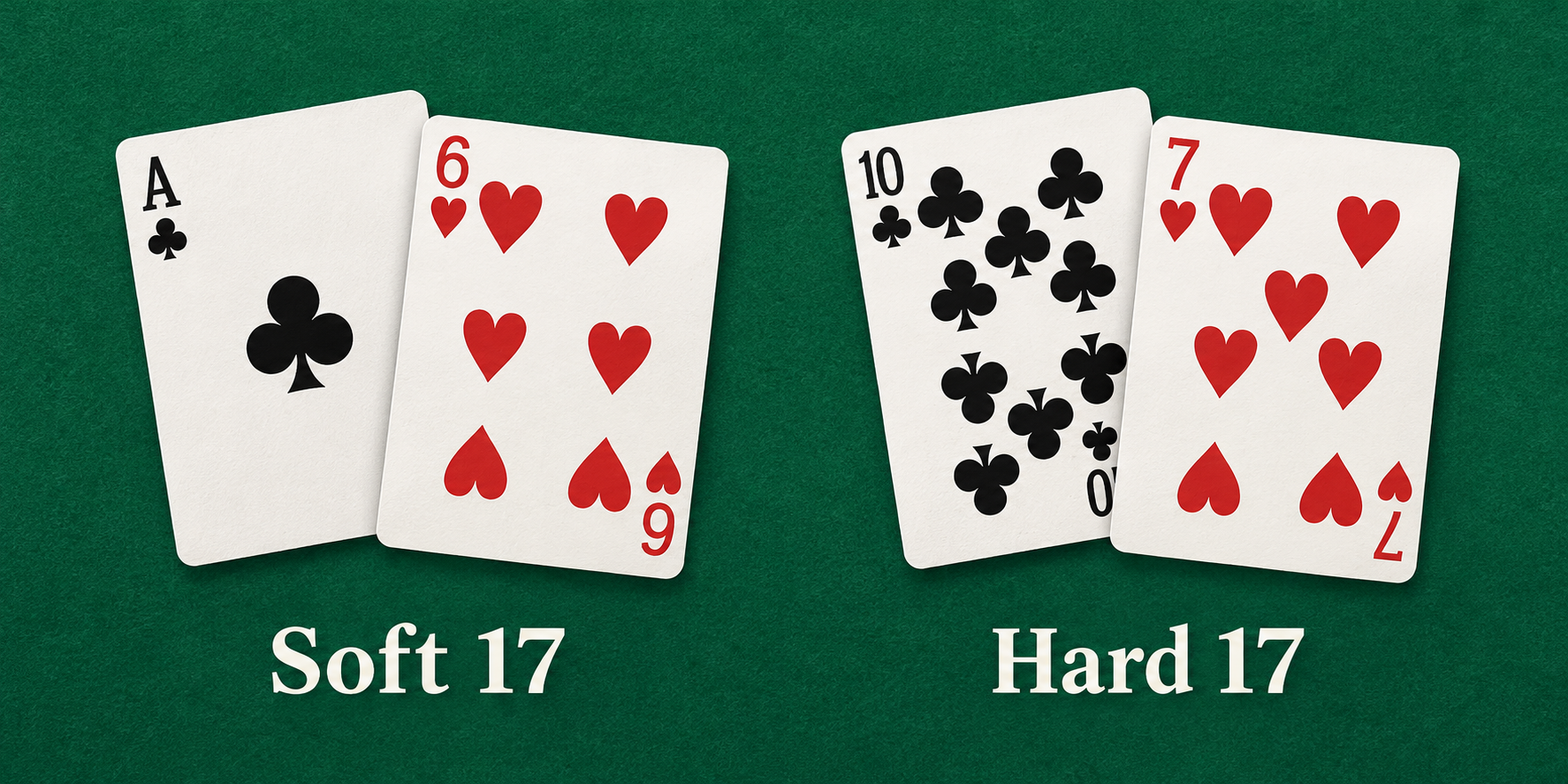
Cards from 2 to 10 have their face value. Jacks, queens and kings each count as 10. An ace can count as 1 or 11, depending on the hand. A hand is soft when it counts an ace as 11 without busting. It is hard when no ace counts as 11. For example, ace plus 6 is soft 17, while 10 plus 7 is hard 17. These examples show how totals work and do not recommend a move.
A natural blackjack is an ace plus a card worth 10 in the original two-card hand. Reaching 21 with three or more cards does not make that hand a natural. A two-card 21 after a split does not automatically qualify either.
The Massachusetts Gaming Commission blackjack rules set out these definitions for regulated play in Massachusetts. These rules apply to that United States jurisdiction. They do not establish Canadian requirements or determine the treatment of every named variation or side bet available elsewhere. They provide a reference for the ordinary mechanics described here. Check the chosen game’s own rules for how it classifies and settles hands.
Hit, stand, double and split
These four actions describe what happens to your hand or wager. The available choices depend on the game’s rules, especially for doubling and splitting.
| Action | What it does | What to check in the rules |
|---|---|---|
| Hit | Request another card for the hand. | When another card is available. |
| Stand | Take no further cards for the hand. | How to confirm that your turn has ended. |
| Double | Where permitted for that hand, add a wager and receive exactly one final additional card. | Eligible hands and the permitted size of the additional stake; do not assume every hand qualifies. |
| Split | Where permitted, separate an eligible pair into two hands with another matching wager. | Which pairs qualify, whether further splits are allowed and how split aces must be played. |
The name double does not by itself establish how much you must add. For example, the Massachusetts rules allow an additional wager up to the original stake. Read the chosen game’s conditions for both the stake and eligible hands. This table explains the actions; it does not say which one to choose in a given situation.
Online blackjack and live dealer formats
Online blackjack can use software or live dealer play. Software games use a random number generator (RNG), while live dealer games use physical equipment such as cards to determine outcomes. Live blackjack can be online too. The distinction is how the game produces its result, rather than whether you reach it through the internet. The UK Gambling Commission explains live dealer games in its British regulatory guidance using this distinction.
Live equipment can still include electronics. Alberta’s AGLC standards cover electronic components of physical equipment used in live games. These are Alberta standards for registered iGaming suppliers, not evidence that every Canadian online game has received approval.
When comparing formats, read the description of the exact game. Does it identify software RNG play or a live dealer format? A format label does not confirm that a particular lobby or table is available to you. It also does not establish greater fairness, better odds, faster play or lower stakes.
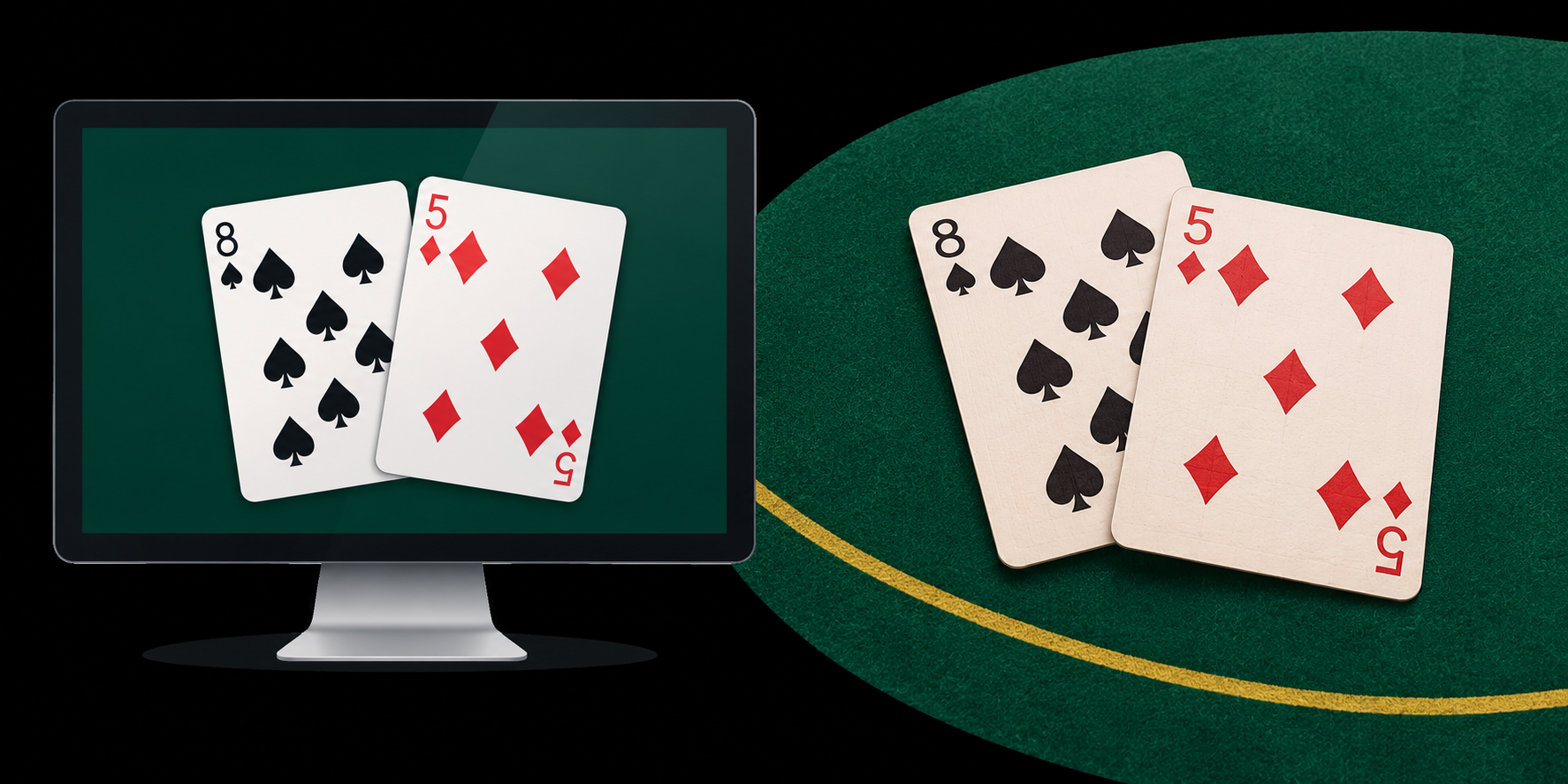
Table rules to check before choosing a game
Read the rules displayed for the particular game before comparing it with another table. Names such as Classic, European or Atlantic City do not replace those rules or establish one fixed configuration for every game using the name.
| Rule | Question to answer |
|---|---|
| Natural blackjack payout | What ratio does the paytable state for a natural? |
| Dealer soft 17 | Must the dealer hit or stand on soft 17? |
| Doubling | Which hands qualify, and how much extra can you wager? |
| Splitting | Which pairs qualify, can you resplit, and what limits apply to split aces? |
| Named variant | Do the full rules match the variant named in the listing? |
| Stakes | What minimum and maximum wagers does this exact game display? |
Massachusetts Gaming Commission blackjack rules give a concrete example of variation: they permit blackjack payouts of 3:2 or 6:5 and alternative dealer procedures for hitting or standing on soft 17. These are Massachusetts rules, not Canadian requirements or an offer available to Canadian players. For doubling, check the permitted added amount instead of assuming it must always equal your original wager. Take the actual settings from the game you are considering.
Assessing an online blackjack listing in Canada
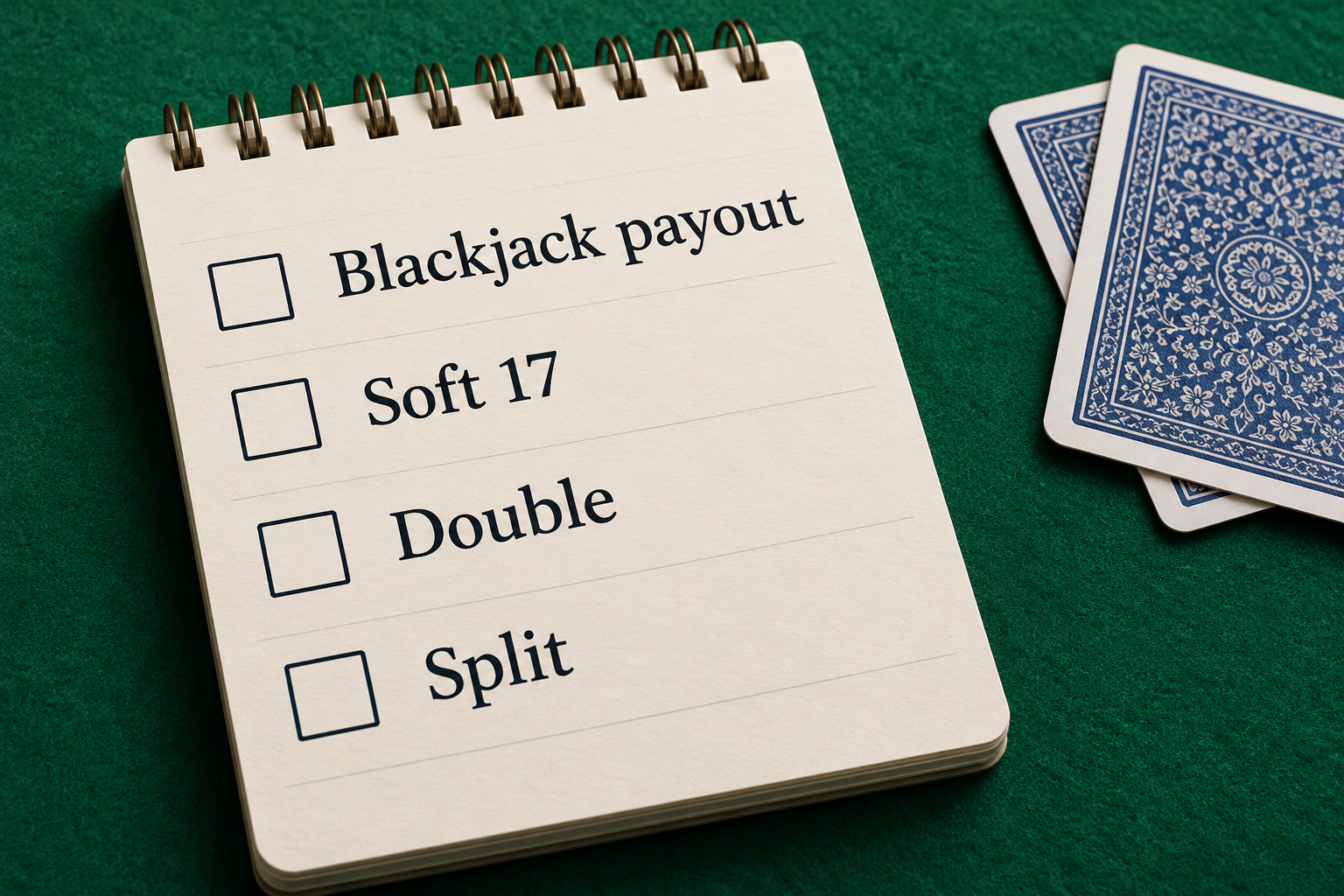
Use these questions to assess an online blackjack listing in Canada. This is an advisory guide. Casino cards and ratings should not be read as verified recommendations, and this page does not offer an embedded game.
- Does the game title match the rules you can actually open? Can you identify the same game in both places, rather than relying on a Live or Classic label?
- What currency and minimum and maximum stakes does the selected game display? Are these figures attached to this table, or only to a general casino listing?
- Does the access information address your province and age? What restrictions does the operator state for your circumstances?
- What happens when you select PLAY? Does it open information, a practice option or a real-money game, and whose page will you reach?
- Is there an actual practice version you can access? If so, do its stated rules match the paid table you are considering?
- What evidence supports a casino card or rating on the page? Does the page explain how the rating was assigned and whether it assesses the operator or this exact game? Can you find the game’s own terms separately?
Limits and risk
Gambling involves risk and should not be treated as a reliable source of income. Before playing, decide how much money and time you are prepared to spend. Use those limits to decide when to end a session, and stop when you reach them. A budget can limit financial harm, but staying within it does not rule out harm in other parts of life.
The Responsible Gambling Council addresses that distinction in its discussion of common gambling myths. It also identifies difficulty stopping as a sign of a problem. If stopping becomes difficult, end the session and seek appropriate support. Take that difficulty seriously even if you have stayed within your spending limit.
